
When people hear the name Lucifer, they often imagine a powerful fallen angel with wings, horns, and a dark appearance. But how much of this image actually comes from the Bible? The answer may surprise you because Scripture gives us a much more complex picture than the stories and images we commonly see today.
In this article, we’ll explore biblically accurate Lucifer, his meaning, his connection with Satan, what the Bible says about his appearance, and how Christian tradition shaped the story. We’ll also separate biblical facts from common myths and modern portrayals so you can understand the subject clearly and from a biblical perspective.
Biblically Accurate Lucifer Identity
Lucifer is a name traditionally associated with the “morning star” mentioned in Isaiah 14:12.
The passage describes the fall of a proud figure who sought to rise above his appointed place.
In Christian interpretation, this passage has often been connected with Satan’s fall.
However, the original context of Isaiah focuses on the king of Babylon and uses poetic imagery.
Understanding this context helps distinguish biblical teaching from later traditions and popular ideas.
- Lucifer appears in Isaiah 14:12 in the King James Version (KJV).
- The Hebrew imagery refers to a shining one or morning star.
- Isaiah 14 primarily describes the fall of the king of Babylon.
- Christian tradition later connected this passage with Satan’s fall.
- The main themes include pride, rebellion, downfall, and divine judgment.
Biblically Accurate Description of Lucifer Appearance
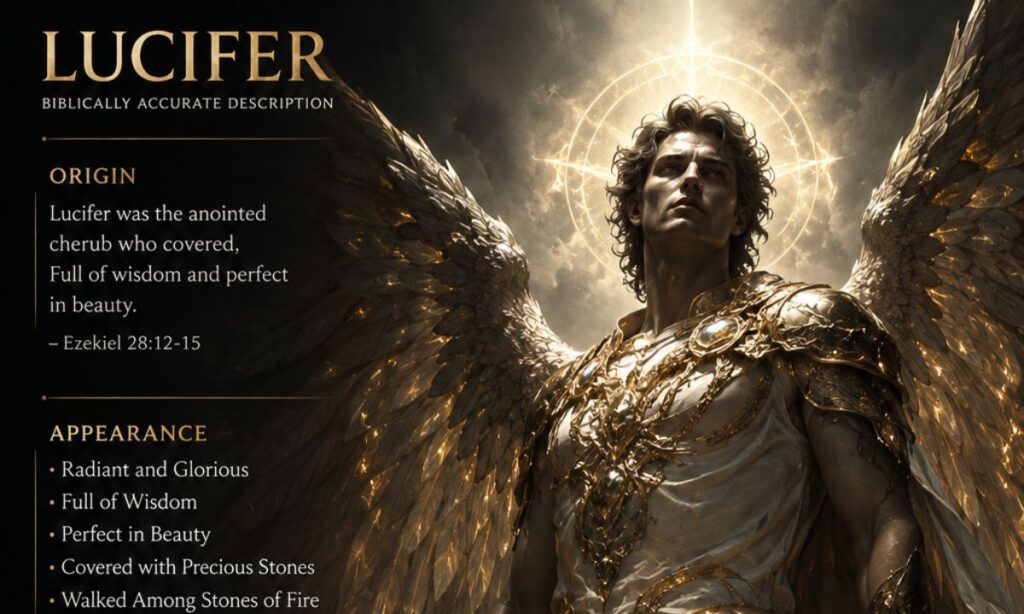
The Bible does not provide a complete physical portrait of Lucifer or Satan.
Isaiah 14 uses symbolic language about a fallen morning star rather than giving a detailed appearance.
Ezekiel 28 is also sometimes connected with Satan, although its immediate context concerns the king of Tyre.
Images of Lucifer with horns, wings, red skin, or a frightening body mostly come from later artistic and cultural traditions.
Therefore, a biblically accurate description should focus on Scripture rather than modern fantasy artwork.
| Feature | Biblical Description |
| Physical Appearance | The Bible does not provide a complete physical description of Lucifer. |
| Morning Star Imagery | Isaiah 14:12 uses the imagery of a bright or shining morning star. |
| Wings | Scripture does not directly describe Lucifer as having wings. |
| Horns | The Bible does not describe Lucifer as having horns. |
| Red Skin | The popular red-skinned appearance comes from later artistic traditions, not Scripture. |
| Beautiful Appearance | Some Christian interpretations connect Lucifer with beauty and splendor, particularly through Ezekiel 28, though its immediate context concerns the king of Tyre. |
| Spiritual Being | Biblical passages portray Satan as a spiritual adversary rather than providing a detailed human-like body. |
| Modern Depictions | Movies, artwork, and fiction often add features that are not explicitly found in the Bible. |
The Morning Star Imagery in Isaiah’s Prophecy
Isaiah 14:12 uses the expression “Lucifer” in the King James Version to translate the idea of a shining or morning star.
The imagery represents someone who appeared exalted but was brought down from a position of pride.
The passage speaks about falling from heaven in highly poetic language.
Its immediate prophetic setting is connected to the king of Babylon and his downfall.
Later Christian interpretation connected this imagery with Satan’s rebellion and fall.
- Isaiah 14:12 uses the imagery of a bright morning star that has fallen from an exalted position.
- The KJV uses the word “Lucifer” for this figure.
- The passage is primarily connected to the king of Babylon and his downfall.
- The imagery represents pride, ambition, exaltation, and eventual humiliation.
- Christian tradition later connected the passage with the fall of Satan, though this interpretation goes beyond the immediate context.
Does Lucifer Possess Physical Form After His Fall?
Scripture does not clearly describe Satan as having a permanent human-like physical body after his fall.
The Bible presents Satan primarily as a spiritual adversary who opposes God and tempts people.
Biblical passages sometimes use symbolic or visionary imagery when describing spiritual beings.
This means popular depictions of a physically transformed Lucifer should not automatically be treated as biblical facts.
A careful interpretation separates scriptural descriptions from later artistic traditions.
| Question | Short Biblical Answer |
| Physical Body | The Bible does not clearly describe Lucifer as having a physical body. |
| Spiritual Being | Satan is presented primarily as a spiritual adversary. |
| Visible Form | Scripture sometimes uses symbolic or visionary imagery. |
| Human Appearance | No specific human-like appearance is confirmed. |
| After the Fall | The Bible does not give a detailed physical description after his fall. |
Common Misconceptions About Lucifer in Modern Culture
Modern movies, television, games, and literature often portray Lucifer differently from the biblical texts.
Some stories present him as an attractive supernatural ruler with a specific physical appearance.
Others treat Lucifer and Satan as completely separate characters with different personalities.
The Bible itself does not provide many of the detailed characteristics commonly found in modern entertainment.
Studying the original passages helps readers recognize the difference between Scripture, tradition, and fiction.
- Lucifer is not explicitly described in the Bible as a red-skinned creature with horns.
- The Bible does not give Lucifer a complete physical appearance like many movies and artworks do.
- The name “Lucifer” is not clearly presented as Satan’s original personal name in Scripture.
- Isaiah 14:12 is often treated as a direct biography of Satan, but its immediate context concerns the king of Babylon.
- Many modern stories about Lucifer are fictional interpretations and should not be confused with biblical teaching.
Jerome’s Latin Vulgate and the Birth of ‘Lucifer’
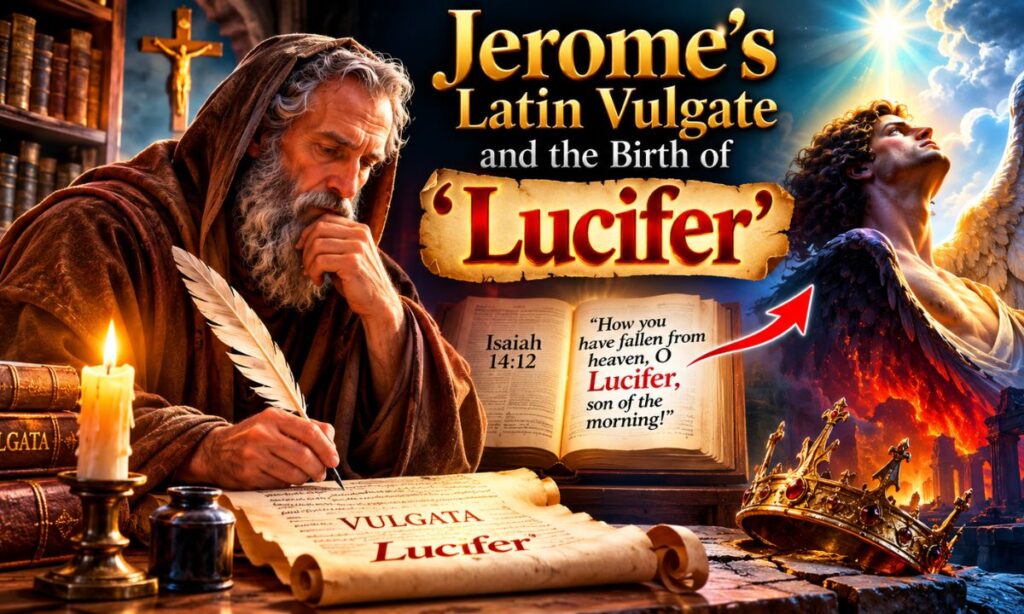
Jerome’s Latin Vulgate played an important role in the history of the word “Lucifer.”
The Latin word lucifer means “light-bearer” or “morning star” and was not originally a personal name for Satan.
In Isaiah 14:12, Jerome used the Latin term to represent the Hebrew imagery of the shining morning star.
Over time, Christian tradition increasingly treated Lucifer as a proper name associated with Satan before his fall.
This historical development helps explain why the word became strongly connected with Satan in Christian literature.
| Aspect | Explanation |
| Jerome’s Translation | Jerome translated the Bible into Latin, producing what became known as the Latin Vulgate. |
| Meaning of Lucifer | The Latin word lucifer means “light-bearer” or “morning star.” |
| Isaiah 14:12 | Jerome used lucifer to translate the Hebrew imagery of the shining morning star. |
| Not Originally a Name | In its original Latin usage, lucifer was a descriptive term rather than necessarily a personal name for Satan. |
| Later Christian Tradition | Over time, Lucifer became increasingly associated with Satan and his supposed pre-fall identity. |
Critical Distinction Between Lucifer and Satan in Scripture
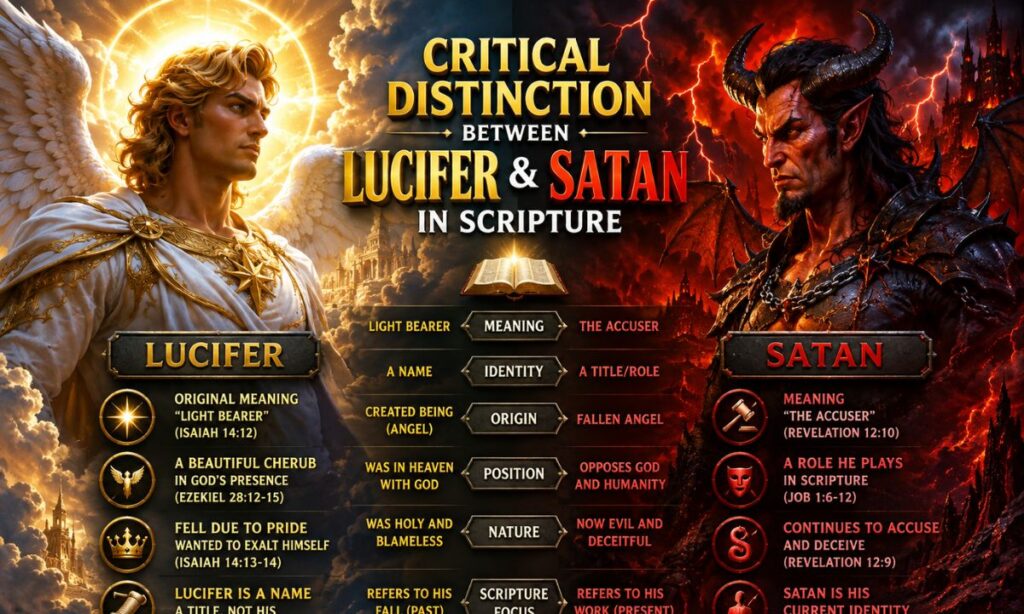
The Bible does not explicitly present the sentence “Lucifer is Satan” in the way many modern summaries do.
Isaiah 14:12 occurs within a prophecy concerning the king of Babylon.
The name Lucifer comes from the Latin translation used in the King James tradition.
Other biblical passages clearly describe Satan as the adversary, tempter, and deceiver.
The identification of Lucifer with Satan developed through interpretation and Christian theological tradition.
Critical Distinction Between Lucifer and Satan in Scripture
- “Lucifer” appears in Isaiah 14:12 in the KJV, while Satan is directly named in many other biblical passages.
- Isaiah 14 is primarily a prophecy concerning the king of Babylon, using poetic imagery of downfall.
- The Bible does not explicitly state in one verse that “Lucifer is Satan.”
- The connection between Lucifer and Satan developed through Christian interpretation and theological tradition.
- A careful reading should distinguish what Scripture directly says from later Christian interpretations.
How Christian Tradition Merged These Figures
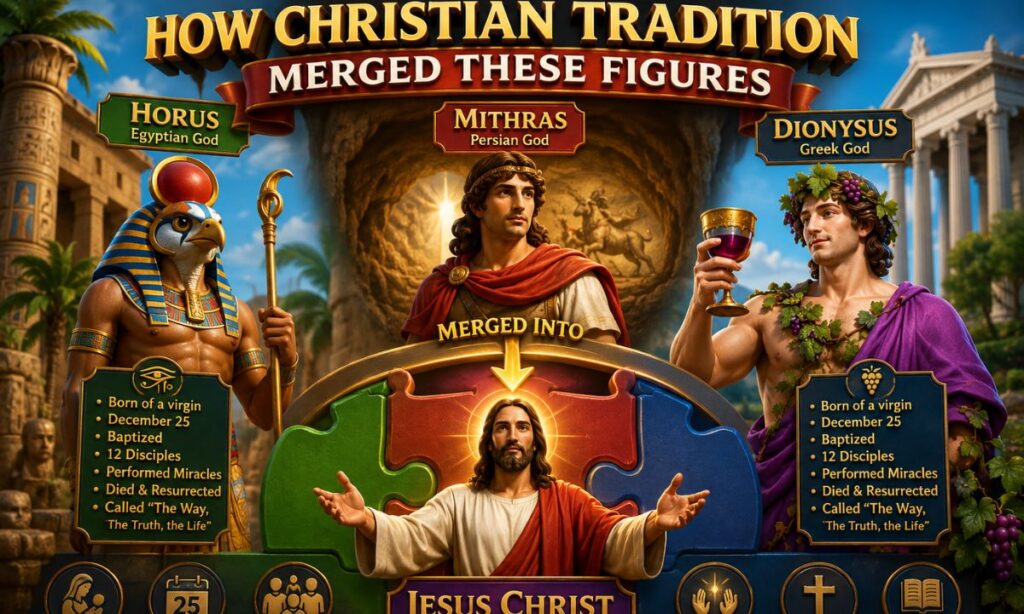
Early and later Christian interpreters connected several biblical passages to develop a broader account of Satan’s fall.
Isaiah 14, Ezekiel 28, Luke 10:18, and Revelation 12 have often been discussed together in this interpretation.
These passages have different immediate contexts and should not automatically be treated as one continuous story.
Christian tradition nevertheless found common themes of pride, rebellion, judgment, and spiritual opposition.
This tradition strongly influenced Christian art, literature, preaching, and popular understanding of Lucifer.
| Biblical Figure or Passage | How It Became Connected to Lucifer/Satan |
| Isaiah 14:12 | The “morning star” imagery was later interpreted by many Christians as describing Satan’s fall from an exalted position. |
| Ezekiel 28:12–17 | The description of the king of Tyre, especially its language about beauty and pride, was traditionally associated with Satan’s rebellion by some Christian interpreters. |
| Luke 10:18 | Jesus’ statement about Satan falling from heaven was connected with the idea of a heavenly fall. |
| Revelation 12:7–9 | The casting down of Satan in the heavenly conflict contributed to the broader Christian narrative of Satan’s fall. |
| Christian Tradition | Over time, these different passages were combined into a single theological story about Lucifer becoming Satan. |
Protestant Reformers’ Rejection of the Equation
Not all Protestant interpreters understood Isaiah 14:12 as a direct reference to Satan.
Many emphasized the historical context of Isaiah and its message against the king of Babylon.
The Reformers generally encouraged readers to pay close attention to the biblical text and its context.
As a result, interpretations of Lucifer and Satan varied among Protestant traditions and later scholars.
This difference demonstrates why the subject should be approached carefully rather than through one universal interpretation.
- Focused on Isaiah 14’s historical context.
- Connected the passage primarily to the king of Babylon.
- Questioned whether “Lucifer” was Satan’s personal name.
- Emphasized careful Scriptural interpretation.
- Protestant views on Lucifer and Satan have varied.
Why This Theological Distinction Matters Today
Understanding the difference between biblical text and later interpretation can lead to a more accurate study of Scripture.
It prevents readers from assuming that popular images or stories are directly stated in the Bible.
The distinction also helps explain why Christians may interpret Lucifer passages differently.
Studying historical language, literary context, and theology provides a stronger foundation for biblical understanding.
Ultimately, the focus should remain on what Scripture actually says rather than on cultural assumptions.
| Reason | Why It Matters |
| Biblical Accuracy | Helps readers understand what Scripture actually says about Lucifer and Satan. |
| Historical Context | Prevents Isaiah 14 from being interpreted without considering its original context. |
| Avoiding Myths | Separates biblical teaching from popular stories, movies, and artwork. |
| Better Understanding | Shows how Christian tradition developed the connection between Lucifer and Satan. |
| Faith & Study | Encourages readers to study Scripture carefully rather than relying only on tradition. |
Biblically Accurate Lucifer Hazbin Hotel
Hazbin Hotel presents Lucifer Morningstar as a fictional character within its own fantasy universe.
This character should not be confused with the biblical passages traditionally associated with Lucifer.
The show’s design, personality, relationships, and storyline are creative interpretations rather than biblical descriptions.
Biblical Lucifer imagery comes primarily from passages such as Isaiah 14:12 and later Christian interpretation.
Comparing the two can help readers clearly distinguish entertainment from Scripture and Christian theology.
- Hazbin Hotel’s Lucifer is a fictional character inspired by religious imagery.
- His appearance and personality are not a direct biblical description.
- The Bible does not describe Lucifer with the same design shown in the series.
- Isaiah 14:12 provides the “morning star” imagery traditionally associated with Lucifer.
- The show should be viewed as fictional entertainment, separate from biblical teaching.
Also Visit This: Sebastian Name in the Bible:
Who Is Lucifer in the Bible?
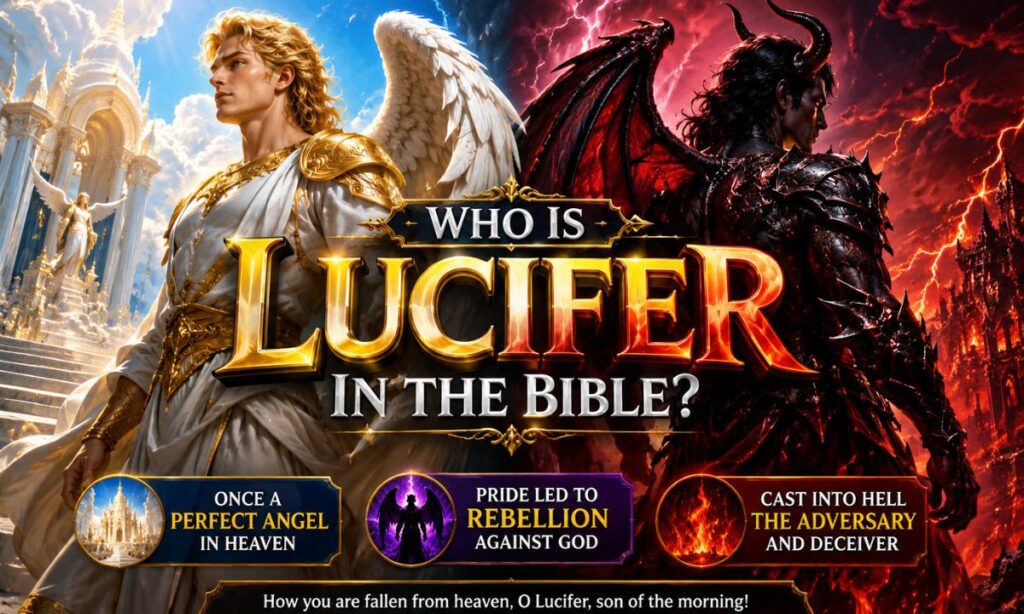
The word “Lucifer” appears in the King James Version of Isaiah 14:12.
The Hebrew expression refers to a shining one or morning star and appears within a passage about Babylon’s downfall.
Later Christian interpretation connected this imagery with the fall of Satan.
However, the Bible does not give a complete biography of a character named Lucifer.
Therefore, understanding Lucifer requires looking at both the original biblical context and the history of Christian interpretation.
| Question | Biblical Answer |
| Where does Lucifer appear? | The name “Lucifer” appears in Isaiah 14:12 in the KJV. |
| What does Lucifer mean? | It comes from Latin lucifer, meaning “light-bearer” or “morning star.” |
| Who is described in Isaiah 14? | The immediate context concerns the king of Babylon and his downfall. |
| Is Lucifer explicitly Satan? | Scripture does not directly state in one verse that Lucifer is Satan. |
| Why are they connected? | Christian tradition later connected Isaiah’s imagery with Satan’s fall and rebellion. |
Description of Lucifer in the Bible KJV
In the KJV, Isaiah 14:12 describes Lucifer as the “son of the morning.”
The imagery presents a figure who has fallen from an exalted position.
The passage continues with language about ascending into heaven and exalting a throne.
This poetic language emphasizes pride, ambition, downfall, and divine judgment.
The KJV wording became especially influential in shaping the traditional Christian image of Lucifer.
- Isaiah 14:12 calls Lucifer the “son of the morning.”
- The passage describes a figure who fell from an exalted position.
- Lucifer is associated with imagery of brightness and heavenly glory.
- Isaiah 14 emphasizes pride, ambition, and downfall.
- The KJV does not provide a complete physical description of Lucifer.
What Happened to Lucifer in the Bible?
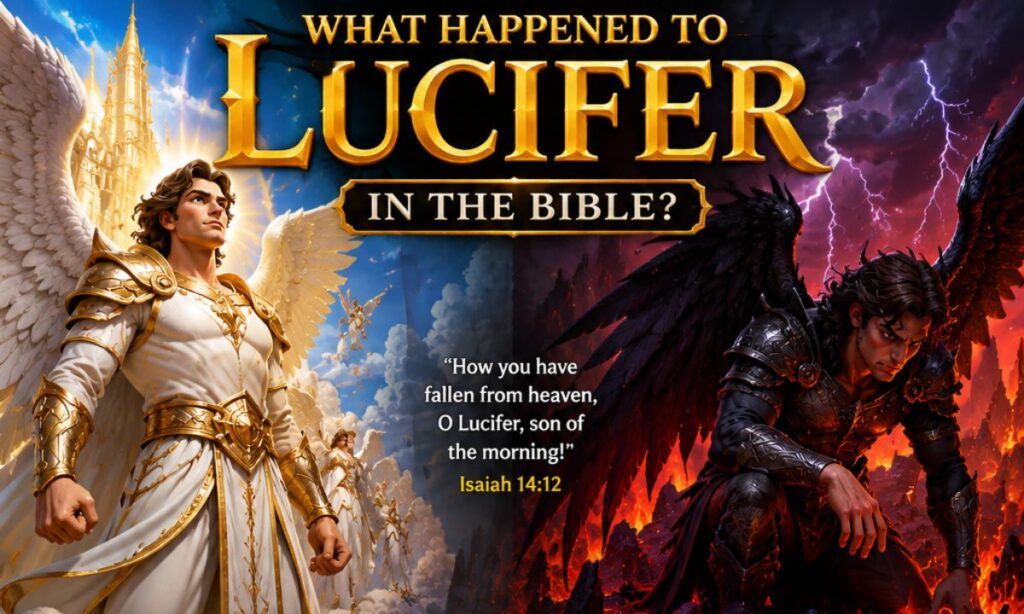
The Bible describes the downfall of a proud figure in Isaiah 14 using powerful poetic imagery.
The figure attempts to exalt himself but is ultimately brought down.
Christian theology later connected this pattern of pride and rebellion with Satan’s fall.
Other passages, including Revelation 12, describe Satan being cast down in apocalyptic imagery.
Together, these texts contributed to the traditional Christian understanding of Lucifer’s fall, although the Bible does not present one single detailed biography.
| Stage | Biblical Understanding |
| Exalted Position | Isaiah 14:12 uses the imagery of a bright “morning star” that had fallen from its high position. |
| Pride & Ambition | Isaiah 14:13–14 describes the figure expressing an ambition to exalt himself above others. |
| Downfall | The proud figure is brought down from his exalted position. |
| Connection to Satan | Christian tradition later connected this passage with the fall of Satan, although Isaiah’s immediate context concerns the king of Babylon. |
| Final Judgment | Scripture ultimately presents Satan as facing God’s judgment and final defeat, especially in Revelation 20:10. |
What Was Lucifer’s Name as an Angel in the Bible?
The Bible does not explicitly give Satan a personal angelic name before his fall and then say that the name was Lucifer.
“Lucifer” is the Latin-derived term used in the KJV of Isaiah 14:12.
The Hebrew wording refers to the morning star or shining one rather than clearly naming an angel.
The idea that Lucifer was Satan’s original angelic name developed through Christian interpretation and tradition.
- The Bible does not explicitly give Satan a different personal name before his fall.
- “Lucifer” comes from the Latin Vulgate and means “light-bearer” or “morning star.”
- In the KJV, Isaiah 14:12 uses the word “Lucifer.”
- Scripture does not directly say that Lucifer was Satan’s original angelic name.
- The idea of Lucifer as Satan’s pre-fall name comes largely from Christian tradition and interpretation.
Conclusion
The story of Lucifer is a fascinating subject that combines biblical Scripture, historical translation, and Christian tradition. Isaiah 14:12 uses the term “Lucifer” in the KJV, describing the imagery of a fallen morning star, while the immediate context focuses on the king of Babylon. Over time, Christian tradition connected this imagery with Satan’s fall, creating the familiar story of Lucifer becoming Satan.
Also Visit this: Damian Meaning in the Bible
Frequently Asked Questions
Who is Lucifer in the Bible?
Lucifer appears in Isaiah 14:12 (KJV) as the “morning star,” traditionally associated with Satan’s fall.
Is Lucifer the same as Satan?
Christian tradition commonly identifies Lucifer with Satan, although Scripture does not explicitly make this identification in one verse.
What does Lucifer mean in the Bible?
Lucifer comes from Latin lucifer, meaning “light-bearer” or “morning star.”
What does Lucifer look like according to the Bible?
The Bible does not provide a complete physical description of Lucifer.
Was Lucifer an angel in the Bible?
The Bible does not directly state that the Lucifer of Isaiah 14 was an angel.
What happened to Lucifer?
The biblical imagery describes an exalted figure being brought down because of pride and ambition.
What was Lucifer’s name before he fell?
Scripture does not explicitly give Satan a different name before his fall.
Does the Bible say Lucifer had wings?
No, Scripture does not directly describe Lucifer as having wings.
Is Lucifer mentioned in the KJV Bible?
Yes, the KJV uses the word “Lucifer” in Isaiah 14:12.
Is Lucifer mentioned in the New Testament?
The New Testament refers to Satan but does not commonly use “Lucifer” as his personal name.
Is Lucifer in Hazbin Hotel biblically accurate?
No, the Hazbin Hotel version of Lucifer is a fictional interpretation.
Why is Lucifer associated with Satan?
Christian tradition connected Isaiah 14’s fallen morning-star imagery with Satan’s fall.