
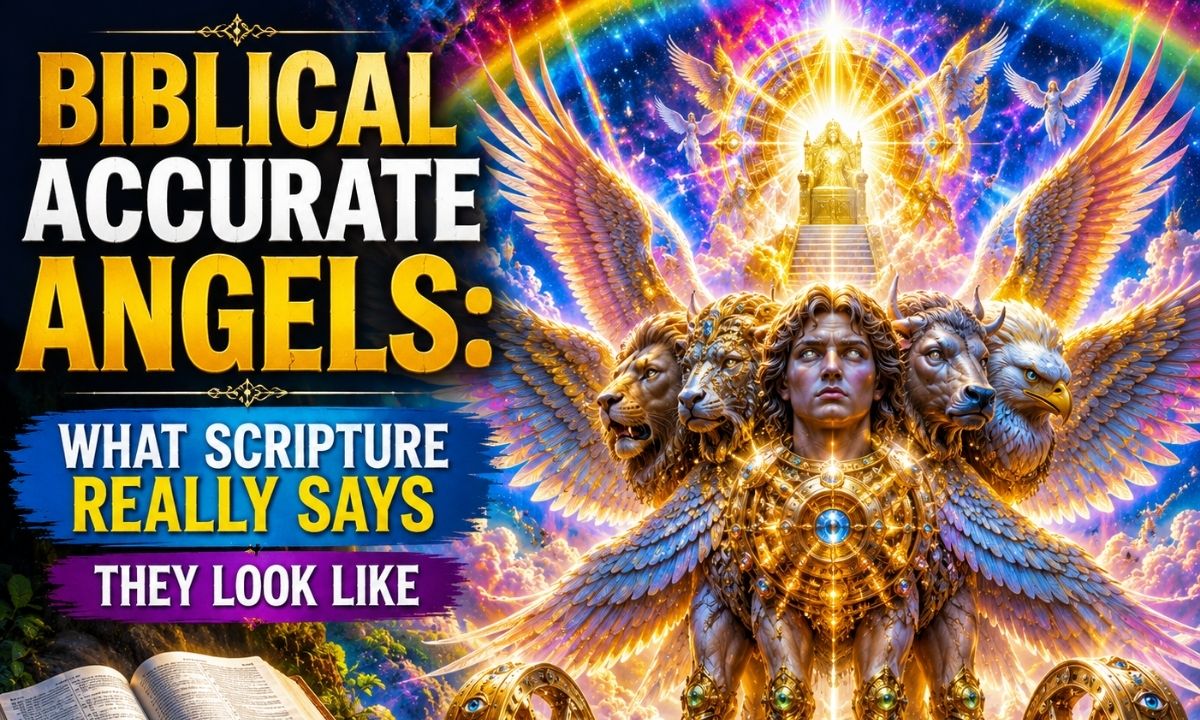
Have you ever wondered what biblical accurate angels really look like? Many people picture angels as beautiful humans with white robes and soft wings. But the Bible gives us a much more detailed and surprising picture. Scripture describes angels and heavenly beings in different forms, especially in books like Ezekiel, Isaiah, and Revelation.
The Bible shows that not every heavenly being looks the same. Some angels appear like ordinary people, while cherubim and seraphim have unusual features. Ezekiel describes creatures with multiple faces, wings, and a powerful appearance. In this article, we will explore what Scripture really says about biblical accurate angels and how these descriptions differ from popular images.
Why “Biblical Accurate Angels” Became a Trend
The idea of “biblically accurate angels” became popular because many people wanted to know what angels really look like in Scripture.
Movies and artwork often show angels as beautiful humans with white wings.
However, the Bible describes some heavenly beings in much more unusual and powerful ways.
Passages in Ezekiel, Isaiah, and Revelation give detailed and sometimes frightening descriptions.
These biblical images have made people curious about the true appearance of angels.
| Reason | Explanation |
| Bible descriptions | Scripture gives unusual details about heavenly beings. |
| Traditional artwork | Many images show angels as humans with wings. |
| Ezekiel’s vision | Ezekiel describes cherubim with remarkable features. |
| Social media | Biblical angel images became popular online. |
| Curiosity | People want to compare Scripture with traditional images. |
What the Bible Actually Says Angels Look Like
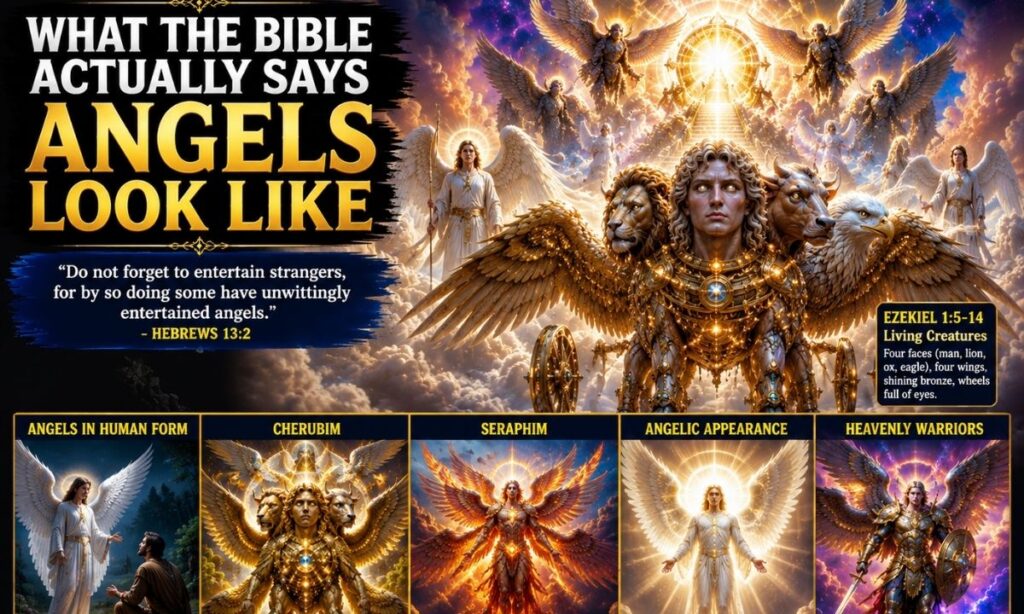
The Bible does not give one single appearance for every angel.
Some angels appear like ordinary men when they visit people.
Other heavenly beings are described with wings, multiple faces, or unusual features.
Cherubim in Ezekiel are described with four faces, four wings, and shining movements.
These descriptions show that biblical angels can look very different from popular artwork.
Key points:
- Not every angel has the same appearance.
- Some angels appear in human form.
- Cherubim have unusual features in Ezekiel.
- Seraphim are described with six wings.
- Biblical descriptions differ from modern artwork.
Types of Angels in the Bible: Quick Comparison
Scripture mentions different heavenly beings, including angels, cherubim, and seraphim.
Angels are often shown as messengers who carry out God’s commands.
Cherubim are connected with God’s glory, presence, and protection.
Seraphim are described in Isaiah 6 as having six wings and praising God.
Each description gives us a different picture of the heavenly beings mentioned in Scripture.
| Being | Biblical Description | Role |
| Angels | Heavenly messengers and servants | Serve God and deliver messages |
| Archangel | Michael is called an archangel | Spiritual leadership |
| Cherubim | Extraordinary heavenly beings | Associated with God’s glory |
| Seraphim | Six-winged heavenly beings | Worship and praise God |
| Living Creatures | Heavenly beings around God’s throne | Proclaim God’s glory |
Common Myths the Bible Corrects
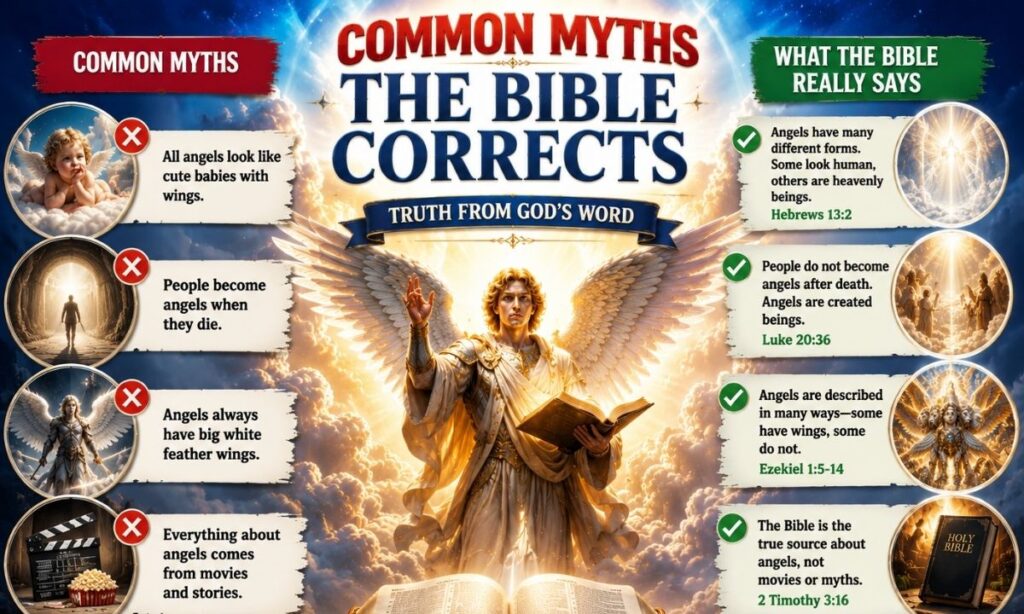
Many common ideas about angels do not come directly from the Bible.
Scripture does not teach that every angel is a small baby with wings.
The Bible also does not say that humans automatically become angels after death.
Instead, angels are created spiritual beings who serve God and carry out His purposes.
Reading Scripture carefully helps separate biblical truth from popular traditions.
Common myths:
- Angels are not always shown as beautiful humans.
- People do not become angels after death.
- Every angel does not look the same.
- Angels are created beings, not God.
- Movies do not always follow biblical descriptions.
Named and Ranked Angels in Scripture
The Bible directly names only a small number of angels.
Michael is called an archangel and is shown as a powerful defender of God’s people.
Gabriel appears as a messenger who delivers important messages from God.
Other heavenly beings, such as cherubim and seraphim, are described by their roles and nature.
Scripture focuses more on their service to God than on creating a detailed angelic ranking.
| Name / Being | Bible Reference | Role |
| Michael | Daniel 10; Jude 1:9 | Archangel and spiritual defender |
| Gabriel | Daniel 8–9; Luke 1 | Messenger from God |
| Cherubim | Ezekiel 10 | Connected with God’s glory |
| Seraphim | Isaiah 6 | Worship God and proclaim His holiness |
| Angels | Hebrews 1:14 | Serve God and His purposes |
Key Bible Verses About Angels (KJV)
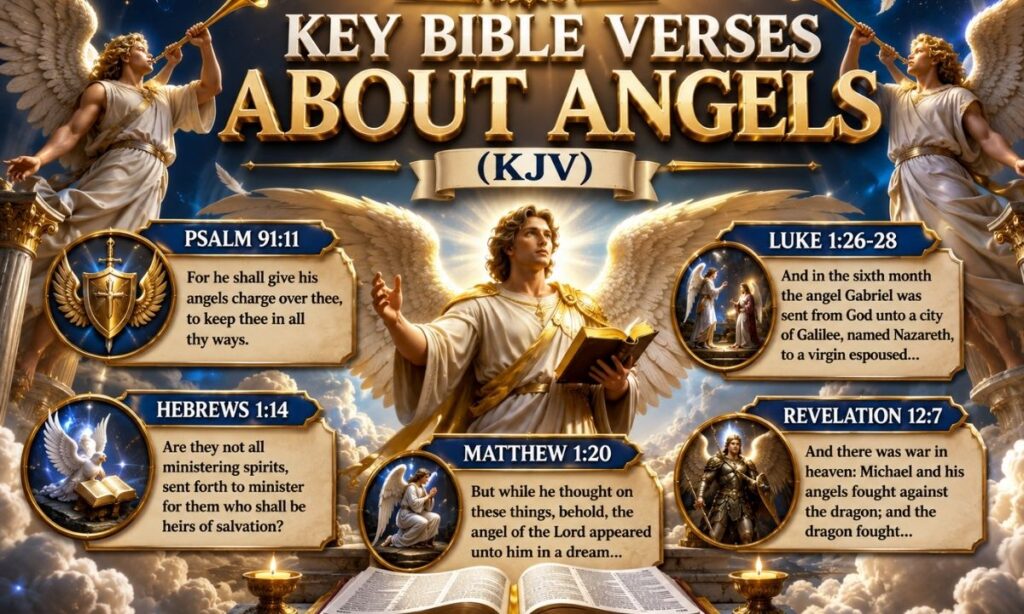
The King James Version contains many important passages about angels.
Psalm 91:11 says that God gives His angels charge over His people.
Hebrews 1:14 describes angels as ministering spirits sent to serve those who will inherit salvation.
Matthew 1 and Luke 1 show angels delivering important messages from God.
These verses remind believers that angels serve God according to His divine purpose.
Important verses:
- Psalm 91:11 — God gives His angels charge over His people.
- Hebrews 1:14 — Angels are ministering spirits.
- Matthew 1:20 — An angel speaks to Joseph.
- Luke 1:26–28 — Gabriel visits Mary.
- Revelation 12:7 — Michael and his angels fight against the dragon.
Why Angels Look So Overwhelming in Scripture
Some biblical descriptions of angels are powerful because they show the greatness of the heavenly realm.
When angels appear, people often respond with fear, wonder, or deep respect.
The angelic beings described by Ezekiel are especially unusual and majestic.
Their appearance emphasizes God’s glory rather than beauty in the human sense.
This helps explain why biblical angels can seem overwhelming compared with modern artistic images.
| Feature | Biblical Example | What It Shows |
| Multiple wings | Seraphim in Isaiah 6 | Heavenly majesty |
| Multiple faces | Cherubim in Ezekiel | Extraordinary nature |
| Bright appearance | Biblical angelic encounters | Heavenly glory |
| Fearful presence | Luke 1:11–13 | Supernatural authority |
| God’s throne | Ezekiel 1 | Connection with divine glory |
How This Changes the Way We Picture Angels
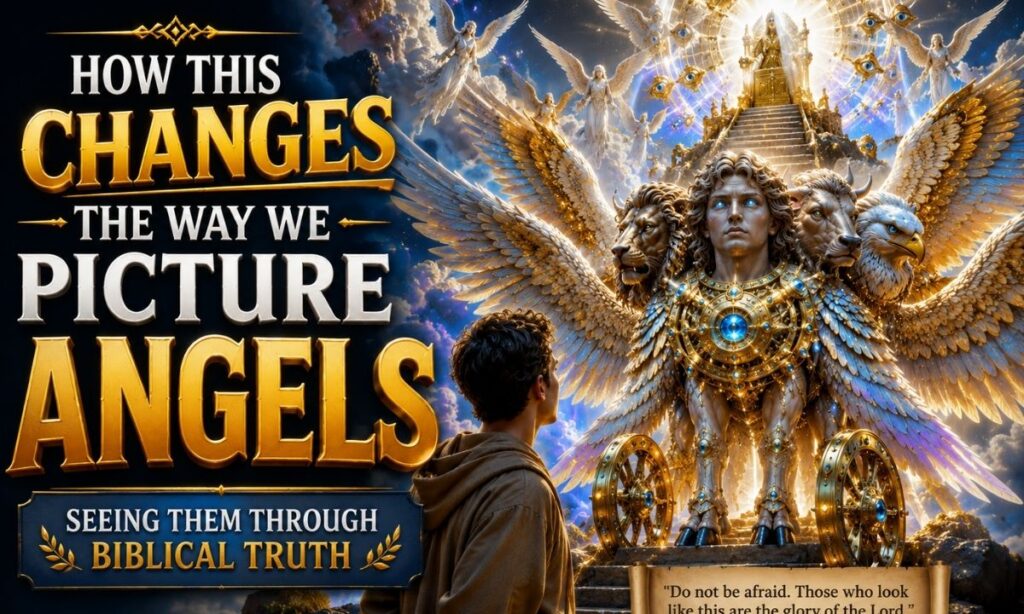
Biblical descriptions can completely change the traditional picture of angels.
Instead of imagining every angel as a person with two white wings, Scripture gives us greater variety.
Some angels appear human, while other heavenly beings have extraordinary features.
The Bible encourages us to focus on what God has revealed rather than popular artwork.
This makes the biblical picture of angels both mysterious and fascinating.
What we learn:
- Angels can have different appearances.
- Scripture gives special details about cherubim and seraphim.
- Biblical angels serve God’s purposes.
- Their appearance can be powerful and mysterious.
- Scripture should guide our understanding.
Also See: 3AM Prayer for Breakthrough
Biblically Accurate Demons
The Bible presents demons as evil spiritual beings opposed to God and His purposes.
They are connected with deception, temptation, spiritual opposition, and evil influence.
Scripture does not describe every demon with the frightening appearance often shown in movies.
Instead, the Bible focuses more on their actions, nature, and opposition to God.
Their ultimate defeat is assured through God’s power and judgment.
Biblical points about demons:
- Demons oppose God and His purposes.
- They are associated with spiritual evil.
- Scripture focuses on their actions more than their appearance.
- They can deceive and tempt people.
- God ultimately has victory over evil.
Biblically Accurate God
The Bible teaches that God is spirit and cannot be reduced to a physical human image.
Scripture sometimes uses powerful descriptions such as light, fire, glory, and a throne to reveal His majesty.
These descriptions help people understand God’s power and holiness without fully defining His appearance.
Ezekiel’s vision of God’s glory uses extraordinary imagery surrounding the divine throne.
The central message is that God is holy, powerful, eternal, and far beyond human understanding.
| Biblical Description | Scripture | Meaning |
| Spirit | John 4:24 | God is spirit |
| Glory | Ezekiel 1:26–28 | Shows His divine majesty |
| Light | 1 Timothy 6:16 | Represents His holiness |
| Fire | Exodus 3:2 | Shows His powerful presence |
| Throne | Isaiah 6:1 | Represents His authority |
Description of Angels in the Bible: Ezekiel
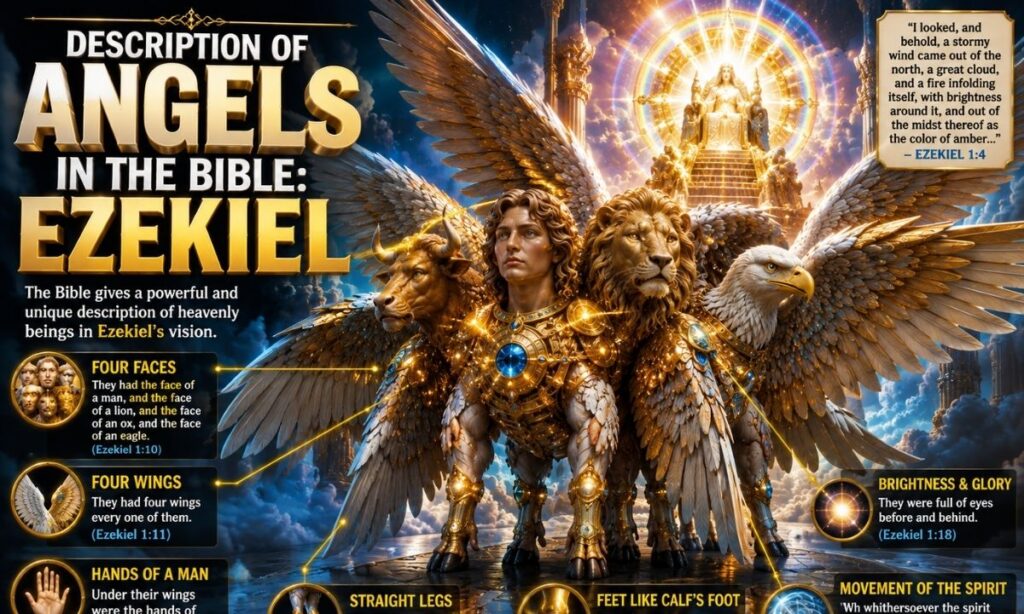
The book of Ezekiel gives one of the most unusual descriptions of heavenly beings in the Bible.
Ezekiel 1 describes living creatures with four faces, four wings, human-like hands, and remarkable movement.
Their faces are described as those of a man, lion, ox, and eagle.
Ezekiel later identifies these beings as cherubim in Ezekiel 10.
The vision presents them as majestic heavenly beings closely connected with God’s glory and throne.
Features described in Ezekiel:
- Four faces
- Four wings
- Human-like hands
- Straight legs
- Feet like a calf’s foot
- Bright and powerful appearance
- Connection with God’s glory and throne
Conclusion
William is a strong and timeless name connected with protection, courage, and determination.
Although the name William is not directly found in the Bible, its meaning reflects many positive biblical values.
It can remind us to stand with strength, wisdom, and faith in difficult times.
The name carries a beautiful message of leadership and inner strength.
For many families, William remains a meaningful name with a powerful and lasting legacy.
Also See: Healing Prayers With Bible Verses
Frequently Asked Questions
Is William a biblical name?
No, William is not directly found in the Bible, but its meaning has positive spiritual connections.
What does the name William mean?
William means “resolute protector” or “strong-willed protector.”
What is the spiritual meaning of William?
The name William can symbolize strength, courage, protection, and determination.
What is the origin of the name William?
William comes from an old Germanic name with roots meaning will, desire, and protection.
Is William a Christian name?
Yes, William is widely used as a Christian name, although it does not originate from the Bible.
What does William mean in Hebrew?
William does not have a direct Hebrew meaning because it is a Germanic name.
Is William a strong name?
Yes, William is often associated with strength, leadership, courage, and protection.
What is the biblical meaning of William?
There is no direct biblical meaning because William is not a biblical name, but its meaning can reflect biblical values.
What personality is associated with William?
William is often associated with confidence, loyalty, determination, and leadership.
Is William a good name for a baby?
Yes, William is a classic name with a strong meaning and a long history.