
The LIAM Bible Verse topic explores Bible verses that match the meaning of the name Liam. Although Liam is not mentioned in the Bible, its meaning reflects strength, courage, and faith. Many Scriptures share these same values and inspire believers every day.
People often search for Bible verses connected to the name Liam for personal encouragement or baby name inspiration. These verses remind us to trust God and live with confidence. They also show how biblical wisdom can give purpose and hope in daily life.
Liam in the Bible
To be transparent — Liam does not appear as a name in the Bible. Scripture was originally written in Hebrew, Aramaic, and Greek, long before Irish naming traditions developed. So while you won’t find “Liam” printed on any biblical page, that doesn’t mean the name lacks spiritual resonance.
- Joshua — commanded to “be strong and courageous”
- David — a protector-king shaped by faith, not force
- Nehemiah — a builder who guarded and restored his people
Why Parents Search for a “Liam Bible Verse”
Naming a child is one of the first gifts a parent gives. Long before a baby learns to walk or speak, they carry a name that shapes how the world greets them. It makes sense, then, that so many parents want more than a pleasant sound — they want meaning, and ideally, meaning that connects to their faith.
Because Liam has surged in popularity over the past decade, more families are asking the same question: is there a verse in Scripture tied to this name? The honest answer is no, not directly. But that hasn’t stopped people from finding a spiritual home for it.
| Reason | Explanation |
|---|---|
| Baby Name Inspiration | Parents want a Bible verse that reflects the meaning and values of the name Liam. |
| Spiritual Blessing | They look for Scripture to pray over their child and ask for God’s guidance. |
| Faith-Based Upbringing | Parents choose verses that encourage faith, love, courage, and wisdom. |
| Personalized Gifts | Bible verses are often added to nursery prints, keepsakes, and baby Bibles. |
| Name Dedication | Families use a meaningful verse during baby dedication or baptism celebrations. |
| Daily Encouragement | A special Bible verse reminds parents and children to trust God every day. |
What Does the Name Liam Mean?
Liam comes from Ireland. It is a short form of William. The name has deep roots in old Germanic language.
It means “strong-willed protector.” This meaning comes from two old words. One means “will,” and the other means “protection.”
Liam is more than just a name today. It carries a message of strength. It also speaks of quiet courage.
| Component | Root Language | Core Meaning |
| Wil | Germanic | Willpower, resolve, determination |
| Helm | Germanic | Shield, protection, safeguard |
| Liam | Irish (from William) | Determined protector |
Biblical Virtues Reflected in the Name Liam
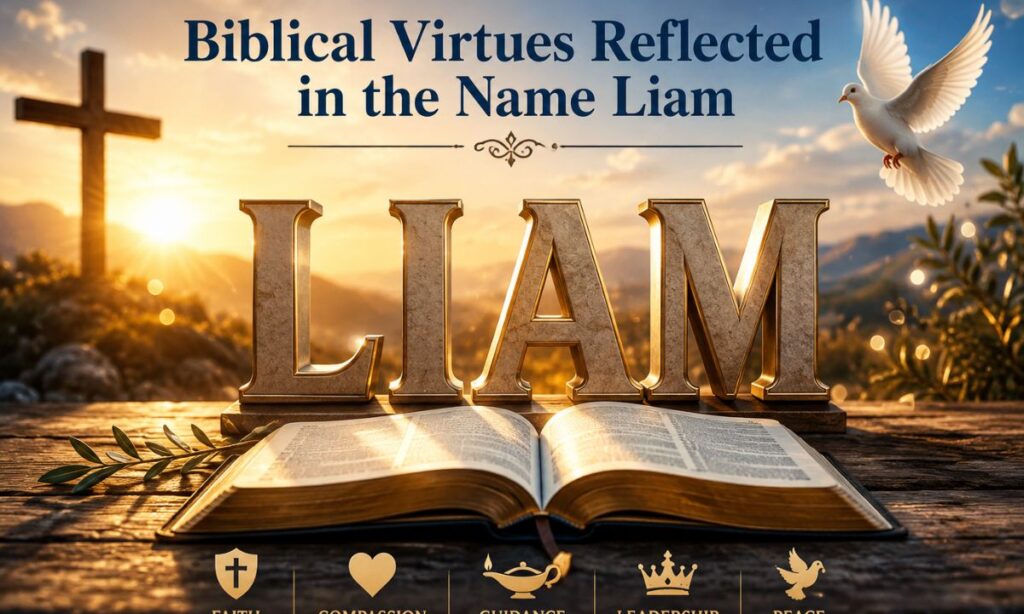
There’s no verse in Scripture that mentions “Liam” by name — the Bible predates the Irish language by centuries. Yet the character behind the name lines up beautifully with virtues celebrated throughout the Old and New Testaments.
- Steadfastness — remaining faithful even in hardship
- Guardianship — protecting and standing up for others
- Boldness — acting in faith rather than fear
- Humility — using strength to serve, not dominate
- Loyalty — staying devoted to God, family, and purpose
Spiritual Significance and Symbolism of the Name Liam
In biblical tradition, names were never accidental — they carried destiny. Sarai became Sarah, Simon became Peter, and each new name marked a spiritual turning point.
While Liam wasn’t given this way, its symbolism still echoes that same idea: who we are is shaped by what we’re called to become.
- Strength flows from faith, not self-reliance.
- Protection is an act of love, not control.
- Willpower, when surrendered to God, becomes purpose.
How to Live Out the Values Associated with Liam

Understanding a name’s meaning is one thing — living it out is another. Below is a simple framework for embodying the strength and protection at the heart of Liam’s meaning.
| Core Value | Scriptural Root | How to Practice It Daily |
| Courage | Joshua 1:9 | Take one brave step despite fear |
| Protection | Psalm 91:4 | Defend and support the vulnerable |
| Perseverance | Philippians 4:13 | Keep going when things get hard |
| Integrity | Proverbs 10:9 | Choose truth even when it costs you |
| Gentleness | Colossians 3:12 | Lead with patience, not force |
Spreading Love and Kindness
A protector’s greatest strength isn’t power — it’s love in action. The Bible consistently pairs strength with tenderness, reminding us that courage without compassion is incomplete.
This is perhaps the most overlooked part of the “protector” archetype. Popular culture often imagines protectors as loud, forceful, or dominant. Scripture tells a different story.
The strongest figures in the Bible are consistently described in terms of gentleness alongside their strength — a shepherd who carries lambs close to his heart, a king who weeps before he fights, a warrior who kneels before he leads.
- Check in on someone who’s been quietly struggling
- Offer words of encouragement instead of judgment
- Show up consistently, not just in big moments
- Practice forgiveness, even when it’s undeserved
- Give generously, without keeping score
Also Visit this Discord Meaning in the Bible
Historical and Cultural Context of the Name Liam
Liam traces its roots to Ireland, where it emerged as a familiar, everyday form of William — a name introduced to the British Isles after the Norman Conquest of 1066. For centuries, William was a name of kings, knights, and leaders, symbolizing authority balanced with responsibility.
- Origin: Ireland (short form of William)
- Meaning: “Determined protector”
- Global popularity: Top 10 boys’ name in multiple countries since the mid-2010s
- Cultural symbolism: Leadership, loyalty, quiet strength
Liam Meaning in Bible
Since there’s no direct “Liam meaning in Bible” passage, many turn instead to verses that reflect the spirit of the name — strength, protection, and faith-filled courage. These are often shared as inspirational “LIAM Bible verses”:
| Verse | Reference | Core Theme |
| “Be strong and courageous… the Lord your God will be with you.” | Joshua 1:9 | Faith-fueled courage |
| “The Lord is my rock, my fortress and my deliverer.” | Psalm 18:2 | Divine protection |
| “I can do all things through Christ who strengthens me.” | Philippians 4:13 | Strength through faith |
| “Wait for the Lord; be strong and take heart.” | Psalm 27:14 | Patient courage |
| “The Lord will fight for you; you need only to be still.” | Exodus 14:14 | Peace through trust |
The Biblical Call to Be Strong and Courageous
At the center of Liam’s meaning is one of Scripture’s most repeated commands: be strong and courageous. This phrase appears again and again throughout the Bible — not as pressure to be fearless, but as an invitation to trust something greater than personal strength.
- Courage isn’t the absence of fear — it’s faith in spite of it
- True strength is anchored in humility, not pride
- Protecting others is one of the clearest expressions of love
- Willpower becomes purposeful when surrendered to God
Nicknames and Variations of Liam
Liam is short and versatile, which means it pairs naturally with a range of nicknames and sibling names. Parents often ask what else complements the name, whether for a middle name, a sibling set, or an alternate form.
- Formal root: William
- Common nicknames: Li, Liyo, Lee
- International variants: Uilliam (Irish Gaelic), Guillermo (Spanish), Guillaume (French), Wilhelm (German)
- Popular middle name pairings: Liam James, Liam Thomas, Liam Michael, Liam Alexander
What Does the Name Liam Mean?
Liam comes from Ireland. It is a short form of William. The name has deep roots in old Germanic language.
It means “strong-willed protector.” This meaning comes from two old words. One means “will,” and the other means “protection.”
Liam is more than just a name today. It carries a message of strength. It also speaks of quiet courage.
| Component | Root Language | Core Meaning |
| Wil | Germanic | Willpower, resolve, determination |
| Helm | Germanic | Shield, protection, safeguard |
| Liam | Irish (from William) | Determined protector |
Also Visit This Best Monday Bible Verses
Conclusion
The name Liam is not found in the Bible, but its meaning fits many biblical values. It reminds us of strength, courage, and faithful leadership. These qualities encourage believers to trust God in every season of life.
Whether you are choosing the name for a baby or learning its spiritual meaning, Liam carries a positive message. It reflects a heart that seeks God’s guidance and lives with faith. Its timeless meaning makes it a meaningful and inspiring name.
Frequently Asked Question
Is Liam mentioned in the Bible?
No, the name Liam is not directly mentioned in the Bible. It is a shortened form of William, which means “strong-willed protector.”
What is the biblical meaning of Liam?
Liam is linked with strength, courage, protection, and faithful leadership. These values align with many biblical teachings.
Is Liam a Christian name?
Yes. While Liam is not a biblical name, many Christian families choose it because of its positive meaning and virtues.
What Bible verse matches the name Liam?
A popular verse is Joshua 1:9, which encourages strength, courage, and trust in God.
What does Liam mean spiritually?
Spiritually, Liam represents faith, bravery, wisdom, and a heart that seeks God’s guidance.
Which Bible character is most like Liam?
Many people compare Liam with David, who showed courage, faith, and strong leadership.
Is Liam a good name for a baby boy?
Yes. Liam is a popular boy’s name with a strong meaning and positive biblical values.
What virtues does the name Liam represent?
Liam symbolizes courage, faith, integrity, kindness, leadership, and protection.
Can Liam have a biblical significance?
Yes. Although the name is not in Scripture, its meaning reflects biblical principles and Christian values.
Why do Christians choose the name Liam?
Many Christians choose Liam because it represents strength, faith, protection, and a life guided by God’s wisdom.