

Search “biblically accurate” online and you will find strange pictures of angels covered in eyes and wheels. The images are popular, and they come from real passages in the Bible. But they raise a bigger question: what does Scripture actually say about God?
The honest answer is that the Bible shows God’s glory in ways that go far beyond human imagination. Prophets like Isaiah, Ezekiel, and John saw visions of fire, thrones, and blinding light. Each one fell to the ground in awe. Yet the same Bible says God is near, loving, and personal.
This guide follows the mainstream Christian reading of Scripture. Here is what you will find inside:
The Concept of a Biblically Accurate God
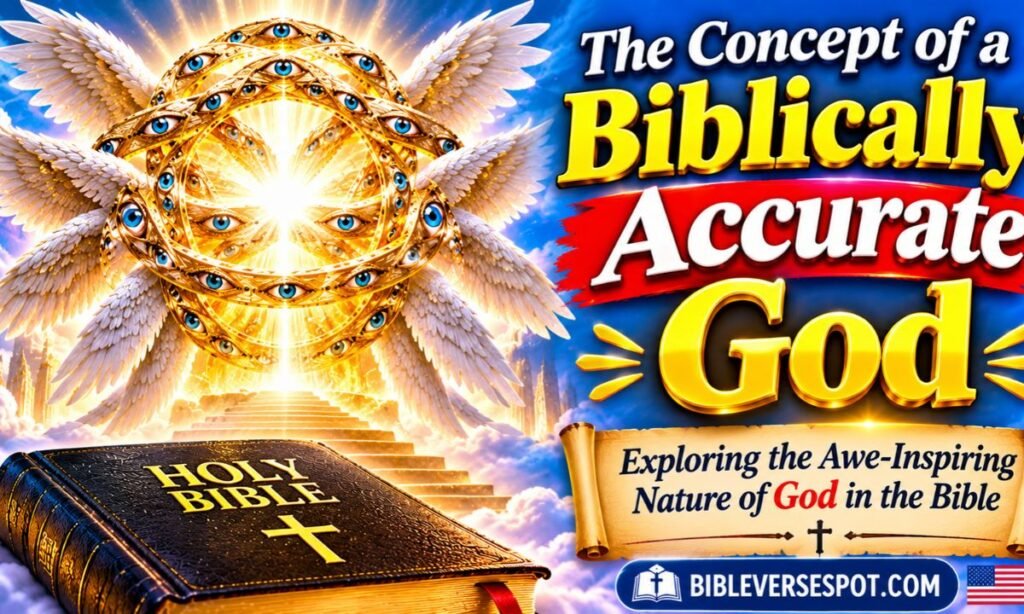
A biblically accurate view of God is one that comes from what Scripture says, not from art, movies, or guesswork.
- The phrase is often used online as a meme about strange looking angels.
- In faith discussions, it means drawing your view of God from the Bible itself.
- The Bible does not give one neat definition of God.
- It reveals God through stories, laws, poems, prophecies, and letters.
- God is described as Creator of everything (Genesis 1:1).
- God is described as one (Deuteronomy 6:4).
- God is described as Spirit (John 4:24).
- God is also described as personal and relational.
- God speaks, listens, loves, and acts in history.
- The Bible uses images like king, shepherd, rock, and father.
- These images point to truth but do not capture all of it.
- Isaiah 55:8-9 says God’s ways and thoughts are higher than ours.
- So humility is part of studying God.
- Different traditions read some passages differently.
- A good approach is to read the whole Bible, not single verses.
Core Divine Attributes Revealed in Scripture
Scripture shows God’s character through several clear attributes.
- Eternal: God has no beginning or end (Psalm 90:2).
- Present everywhere: no one can escape God’s presence (Psalm 139:7-10).
- All-knowing: God’s understanding has no limit (Psalm 147:5).
- All-powerful: nothing is too hard for God (Jeremiah 32:17).
- Holy: God is set apart and pure (Isaiah 6:3).
- Loving: “God is love” (1 John 4:8).
- Just: all God’s ways are just (Deuteronomy 32:4).
- Merciful: God is slow to anger and rich in love (Exodus 34:6-7).
- Faithful: God’s mercies are new every morning (Lamentations 3:22-23).
- Unchanging: God’s character stays the same (Malachi 3:6).
- Good: every good gift comes from above (James 1:17).
- Truthful: God does not lie (Numbers 23:19).
- Wise: God’s wisdom is deep beyond measure (Romans 11:33).
- Self-existent: God depends on nothing (Exodus 3:14).
- Sovereign: God rules over all things (Psalm 103:19).
Biblical Descriptions of God’s Appearance
The Bible gives only limited and symbolic descriptions of what God looks like.
- Exodus 33:20 says no one can see God’s face and live.
- John 1:18 says no one has ever seen God.
- Yet Exodus 24:10 says Moses and the elders saw the God of Israel.
- Many scholars read this as a partial vision, not God’s full being.
- Exodus 33:11 says God spoke to Moses as a friend.
- Moses was later allowed to see only God’s back (Exodus 33:23).
- Ezekiel 1:26-28 describes a figure like a human on a throne, glowing like fire.
- Daniel 7:9 describes the Ancient of Days with white clothing and hair like wool.
- These are visions, not photographs.
- Deuteronomy 4:15-16 warns against making images of God.
- The Bible often uses human terms, like God’s hand or eyes.
- Scholars call this anthropomorphic language.
- It helps us understand God, but God is spirit.
- Jesus is called the image of the invisible God (Colossians 1:15).
- So the clearest picture of God, in Christian belief, is Jesus.
God’s Glory and Holiness in Heavenly Visions
Heavenly visions in Scripture show God’s glory in ways that leave people humbled.
- Isaiah 6:1-3 shows God on a high throne, with the temple filled by his robe.
- Seraphim calls out “Holy, holy, holy.”
- Isaiah’s response was fear and a sense of his own sin.
- Ezekiel 1 describes four living creatures and wheels full of eyes.
- Ezekiel fell on his face (Ezekiel 1:28).
- The strange angels in Ezekiel are where the “biblically accurate angel” meme comes from.
- Revelation 4 shows a throne in heaven with a rainbow and sea of glass.
- Creatures there worship day and night.
- Daniel 7 shows thrones, fire, and countless attendants.
- Revelation 1:12-16 shows Jesus with eyes like fire and a voice like rushing water.
- John fell at his feet as though dead.
- Moses’ face shone after being near God (Exodus 34:29-30).
- The common response to God’s glory is awe and worship.
- These scenes stress holiness more than appearance.
- They also bring comfort, since the same God says “Do not be afraid” (Revelation 1:17).
Experiencing the Presence of God in Everyday Life
The Bible teaches that God is near, not only in grand visions but in ordinary days.
- Psalm 139 says God knows us and is with us everywhere.
- Matthew 28:20 records Jesus saying he is with us always.
- James 4:8 says draw near to God, and God will draw near to you.
- Acts 17:27-28 says God is not far from any of us.
- Prayer is a main way people seek God (1 Thessalonians 5:17).
- Reading Scripture helps people hear God’s voice.
- Psalm 46:10 invites us to be still and know God.
- Worship, alone or with others, builds awareness of God.
- Nature points to God’s creation (Psalm 19:1).
- Kindness to others reflects God’s love (1 John 4:12).
- Gratitude trains the heart to notice God’s gifts.
- Psalm 34:8 says to taste and see that the Lord is good.
- Many people find God in quiet moments and in community.
- Feelings of closeness come and go.
- Faith teaches that God is present even when we do not feel it.
Also See:
In Christian belief, Jesus is the fullest picture of who God is.
- John 1:1 says the Word was with God and was God.
- John 1:14 says the Word became flesh.
- Hebrews 1:3 says the Son is the exact imprint of God’s nature.
- Colossians 1:15 calls Jesus the image of the invisible God.
- In John 14:9, Jesus says whoever has seen him has seen the Father.
- Jesus showed God’s compassion by healing the sick.
- He showed God’s mercy by forgiving sinners.
- He showed God’s holiness by confronting hypocrisy.
- He showed God’s humility by washing his disciples’ feet (John 13).
- He showed God’s love by dying on the cross.
- Christians believe the resurrection shows God’s power over death.
- Jesus taught people to call God “Father” (Matthew 6:9).
- He spoke of God’s care for sparrows and lilies (Matthew 6:26-30).
- Christians read the Old Testament in light of Jesus.
- Judaism and Islam do not hold this view of Jesus.
Essential Characteristics of the Biblically Accurate God
A biblically accurate picture holds God’s characteristics together in balance, rather than choosing only the ones we like.
- God is both loving and holy.
- God is both just and merciful.
- God is both near and beyond us.
- God is powerful but not cruel.
- God is personal but not human.
- God is patient but not careless about evil.
- Psalm 85:10 says mercy and truth meet, and righteousness and peace kiss.
- Romans 11:22 speaks of both God’s kindness and severity.
- God’s love is shown in Romans 5:8, while we were still sinners.
- God’s justice is shown in Psalm 89:14.
- God’s patience is described in 2 Peter 3:9.
- God’s care for the poor appears in Psalm 68:5.
- God invites relationship, not just obedience.
- God is worthy of both love and reverence.
- Dropping any one trait gives a distorted picture.
The Triune Nature of God: Father, Son, and Spirit
Most Christians believe in one God who exists as three persons: Father, Son, and Holy Spirit.
- The word “Trinity” is not in the Bible.
- The idea comes from putting biblical teaching together.
- Scripture says God is one (Deuteronomy 6:4).
- It also speaks of Father, Son, and Spirit.
- Matthew 28:19 names all three in one baptismal formula.
- 2 Corinthians 13:14 gives a threefold blessing.
- At Jesus’ baptism, the Father speaks, the Son is baptized, and the Spirit descends (Matthew 3:16-17).
- The Son is called God in John 1:1.
- The Spirit is called God in Acts 5:3-4.
- Early church councils, such as Nicaea in 325, clarified the doctrine.
- It teaches that the three are distinct but not separate gods.
- Many analogies help but none are perfect.
- The Trinity is understood as a mystery, not a puzzle to solve.
- Jews, Muslims, and some Christian groups, such as Unitarians, do not accept this teaching.
- For most Christians, it is central to who God is.
Correcting Common Misconceptions About God
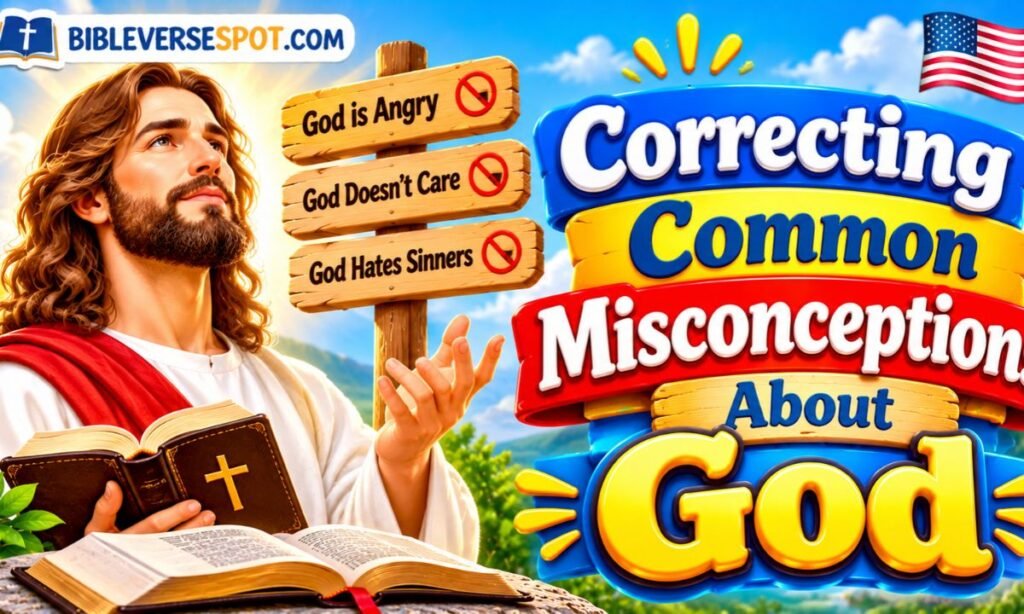
Many popular ideas about God come from culture, not Scripture.
- God is not an old man on a cloud.
- God is spirit, not a physical being (John 4:24).
- God is not distant and uninterested.
- Psalm 34:18 says God is near the brokenhearted.
- God is not only about rules.
- Micah 6:8 stresses justice, mercy, and humility.
- God does not love only good people.
- Romans 5:8 says Christ died for us while we were sinners.
- “God helps those who help themselves” is not in the Bible.
- It is often credited to the Bible but is not there.
- “God won’t give you more than you can handle” is a misreading.
- 1 Corinthians 10:13 is about temptation, not suffering.
- God is not male in a physical sense.
- Scripture uses mostly masculine language, but also motherly images (Isaiah 66:13, Matthew 23:37).
- God is not a genie who grants wishes.
Reconciling Old and New Testament Portraits of God
The God of the Old Testament and the God of the New Testament are the same, even though they can seem very different at first.
- Some people say the Old Testament God is angry and the New is loving.
- This split is too simple.
- The Old Testament describes God’s mercy often.
- Exodus 34:6 calls God compassionate and gracious.
- Psalm 103 celebrates God’s forgiveness.
- Hosea 11 shows God’s tender love, like a parent teaching a child to walk.
- The New Testament also speaks of judgment.
- Hebrews 10:31 warns that it is fearful to fall into God’s hands.
- Jesus spoke of hell more than any other New Testament figure.
- The church rejected Marcion in the second century for dividing the two Gods.
- Jesus said he came to fulfill the Law, not abolish it (Matthew 5:17).
- The Old Testament was written over many centuries in a harsh ancient world.
- Some difficult passages, like the conquest of Canaan, are debated.
- Scholars offer different explanations, and honest questions are welcome.
- The shared thread is a God who is holy, just, and merciful.
Common Misinterpretations Regarding God’s Nature
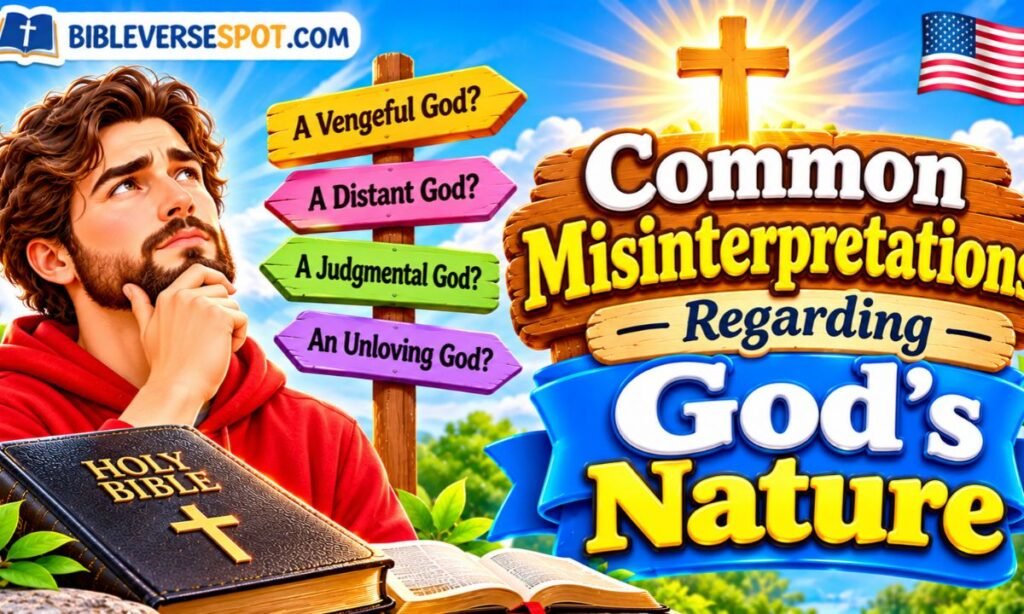
Some errors come from misreading Scripture itself or from teachings the church has rejected.
- Modalism says God is one person who wears three masks.
- The church rejected it because the Father, Son, and Spirit relate to each other.
- Arianism says the Son was created and is not fully God.
- The Council of Nicaea rejected this view.
- Tritheism says there are three separate gods.
- That contradicts the Bible’s claim that God is one.
- Deism says God made the world and left.
- Scripture says God is active and involved.
- Pantheism says God is the same as nature.
- The Bible says God made nature and is distinct from it.
- Open theism argues that God does not know the future fully.
- Many Christians reject this and cite Isaiah 46:10.
- Prosperity teaching says God promises wealth to the faithful.
- Jesus warned against trusting in riches (Luke 12:15).
- Reading single verses without context causes many errors.
Conclusion
A biblically accurate view of God keeps the whole picture in view. God is holy and loving, powerful and near, just and merciful. Visions in Scripture show glory that brings awe, and Christians believe Jesus shows God’s character most clearly.
The Trinity points to a God who is one in being and rich in relationship. If you want to know God better, read Scripture in full, ask honest questions, and be open to the parts that stretch your thinking.
Also See:
Frequently Asked Questions
What does the Bible say God looks like?
The Bible does not give a full physical description. It says God is spirit (John 4:24) and that no one has seen God fully (John 1:18). Visions like Ezekiel 1 and Daniel 7 use symbols of light, fire, and thrones.
What is a biblically accurate God?
It means a view of God based on what Scripture says. God is eternal, holy, loving, just, merciful, and all-powerful. Christians also believe God is Father, Son, and Holy Spirit.
Is the Trinity in the Bible?
The word “Trinity” is not in the Bible. The teaching comes from verses that speak of God as one and also name Father, Son, and Spirit, like Matthew 28:19.
Is the God of the Old Testament different from the New Testament?
Most Christians say no. The same God is shown in both. The Old Testament has mercy and the New Testament has judgment, so the difference is one of emphasis, not of character.
What are the main attributes of God in the Bible?
God is eternal, all knowing, all powerful, present everywhere, holy, loving, just, merciful, faithful, and unchanging.
Can anyone see God?
Exodus 33:20 and John 1:18 say no one can see God’s full glory. Christians believe Jesus makes God known (John 14:9).
Is “God helps those who help themselves” in the Bible?
No. This saying is often mistaken for Scripture, but it is not in the Bible. The Bible teaches that God helps the weak and the humble (Psalm 46:1).

4 thoughts on “Biblically Accurate God: Revealing the True Glory Beyond Human Imagination”