
Tristan Name Meaning in Bible And Greek carries a rich history, beautiful cultural roots, and meaningful spiritual symbolism. Although Tristan is not directly mentioned in the Bible, its traditional meaning is associated with sadness, courage, loyalty, and emotional strength.
Many parents explore the Tristan name meaning in the Bible to understand its spiritual significance, Hebrew and Greek connections, and Christian interpretations. In this guide, we will discover the origin of Tristan, its biblical associations, cultural history, and the positive faith-based lessons that make this name special in 2026.
Tristan Name Meaning Bible
The name Tristan is not a biblical name, but it can be connected to several positive qualities taught throughout the Bible. Its traditional origins are associated with Celtic and medieval European history.
- Tristan is a name with ancient European roots.
- It is traditionally associated with the meaning of sadness or sorrow.
- The name has strong connections to Celtic culture.
- Tristan is not listed among the biblical names.
- It can symbolize courage during difficult times.
- The name can remind people to remain faithful to God.
- Tristan is associated with famous stories of loyalty and love.
- Its spiritual interpretation can represent inner strength.
- The name encourages kindness toward others.
- Tristan can represent hope after sadness.
- It reminds believers that God understands human struggles.
- The name can symbolize patience and perseverance.
- Tristan has a strong and timeless sound.
- Christian parents may connect it with faith and compassion.
- Its deeper spiritual meaning depends on personal faith and values.
What Does the Name Tristan Mean?
Tristan is traditionally connected with the Old French form of a name derived from the Latin Tristanus, influenced by the word tristis, meaning sad or sorrowful. Over time, the name became famous through medieval European legends.
- Tristan is a traditional masculine name.
- It has medieval European origins.
- Its traditional meaning is associated with sadness.
- It became popular through the Tristan and Isolde legend.
- The name is used in many English-speaking countries.
- Tristan has a romantic historical background.
- It is often connected with loyalty and devotion.
- The name has a classic yet modern feel.
- Tristan is easy to recognize and pronounce.
- It has several cultural variations.
- The name became popular among modern parents.
- Tristan is associated with emotional strength.
- It carries a rich literary history.
- Its spiritual interpretation can represent overcoming hardship.
- The name can remind people to choose hope over sadness.
Is Tristan Mentioned in the Bible?
No, Tristan is not mentioned anywhere in the Bible. It does not appear among the names of biblical prophets, disciples, kings, or other important biblical figures.
- Tristan is not a Hebrew biblical name.
- The name does not appear in the Old Testament.
- It is not mentioned in the New Testament.
- No biblical character is officially named Tristan.
- Its origins are connected to European languages.
- It became known through medieval literature.
- The Bible contains many other names with spiritual meanings.
- Tristan can still be used by Christian families.
- Its values can be compared with biblical teachings.
- The Bible teaches that names can carry personal significance.
- God looks at a person’s heart and character.
- A person’s actions matter more than their name.
- Tristan can symbolize strength during difficult situations.
- Christians can give any suitable name a meaningful family story.
- Faith and good character are more important than a name’s origin.
Spiritual Significance of the Name Tristan
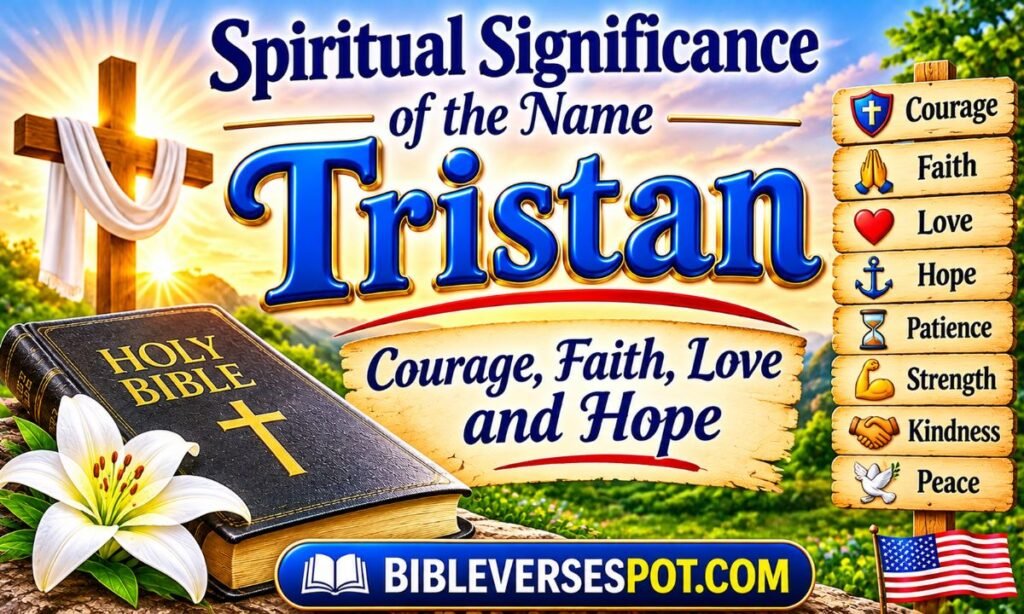
Although Tristan has no direct biblical meaning, its spiritual interpretation can represent courage, patience, love, and hope. These qualities are important themes throughout Christian teachings.
- Tristan can symbolize courage during challenges.
- It can remind believers to trust God.
- The name can represent patience in difficult times.
- It encourages people to show kindness.
- Tristan can symbolize loyalty and commitment.
- It can remind people to forgive others.
- The name can represent hope after sorrow.
- It encourages strength through prayer.
- It can symbolize love and compassion.
- Tristan may inspire people to remain humble.
- It can represent emotional growth.
- The name reminds believers to choose peace.
- It can encourage faith during uncertainty.
- Tristan can symbolize a heart full of gratitude.
- Its spiritual message can be about finding hope through God.
Tristan in Biblical History and Tradition
Tristan does not have a recorded place in biblical history, but its cultural history is connected to European medieval traditions. Christian families may interpret its values through biblical principles.
- Tristan is not associated with an Old Testament figure.
- It is not connected to a New Testament disciple.
- The name became famous in medieval European stories.
- Its history includes Celtic and French influences.
- Tristan and Isolde is a well known medieval romance.
- The name became popular through literature.
- Christian traditions emphasize faith and honesty.
- Biblical teachings encourage loyalty and forgiveness.
- Tristan can represent courage in personal struggles.
- Its history is different from Hebrew biblical names.
- The name has appeared in European naming traditions.
- It can be used by Christian families today.
- Its meaning can inspire personal reflection.
- The Bible teaches the importance of a person’s character.
- Tristan’s cultural history gives it a distinctive identity.
The Origin of Tristan in Celtic and Christian Culture

Tristan is widely associated with Celtic legend and medieval European storytelling. Its popularity grew through the famous story of Tristan and Isolde, which influenced literature, music, and European naming traditions.
- Tristan has strong connections to Celtic legend.
- It became famous in medieval European literature.
- The name is associated with the Tristan and Isolde story.
- French literature helped spread the name.
- Its history includes several linguistic influences.
- Tristan became popular across Europe.
- It is used in modern English-speaking communities.
- The name has a romantic literary background.
- Celtic traditions contributed to its cultural identity.
- Christian families have also adopted the name.
- It does not originate from biblical Hebrew.
- Its cultural meaning differs from its spiritual interpretation.
- The name is recognized in many countries.
- Tristan remains popular as a modern baby name.
- Its history makes it an interesting choice for parents.
Biblical Names Similar to Tristan
Parents looking for a name like Tristan may also consider biblical names that carry meanings related to strength, faith, wisdom, and love.
- Ethan means strong and firm.
- Daniel means God is my judge.
- Samuel means God has heard.
- Nathan means he has given.
- David means beloved.
- Gabriel means God is my strength.
- Michael means who is like God?
- Elijah means my God is Yahweh.
- Noah is associated with rest and comfort.
- Caleb is traditionally associated with devotion and faithfulness.
- Isaac means laughter.
- Benjamin means son of the right hand.
- Aaron is a traditional biblical name of uncertain meaning.
- Jonathan means God has given.
- Joshua means the Lord is salvation.
Why Parents Choose Tristan: A Biblical Perspective

Many parents choose Tristan because of its classic sound, rich history, and meaningful cultural background. Christian parents may also connect the name with positive values found in Scripture.
- Tristan has a timeless and attractive sound.
- It is easy to recognize in many countries.
- The name has a rich cultural history.
- It offers a unique alternative to common biblical names.
- Parents may associate it with courage.
- Its history makes it interesting and memorable.
- It can represent loyalty and commitment.
- Christian families can give it a faith-based interpretation.
- The name works well with traditional middle names.
- It has a strong and gentle sound.
- Tristan is suitable for different cultural backgrounds.
- Parents may appreciate its literary connections.
- It can remind a child to overcome difficulties.
- Its spiritual symbolism can encourage kindness.
- Parents can connect the name with their family’s values.
Also See:
Tristan Name Meaning in Hebrew
Tristan does not have an established Hebrew origin or a direct Hebrew meaning. It is generally connected to European naming traditions rather than the Hebrew language.
- Tristan is not originally a Hebrew name.
- It has no widely accepted biblical Hebrew translation.
- It does not appear in the Hebrew Bible.
- Its roots are connected to European languages.
- Hebrew names often have meanings connected to God.
- Tristan has a different historical background.
- It should not be confused with traditional Hebrew names.
- Its meaning is commonly associated with sorrow.
- Hebrew names such as Ethan represent strength.
- Daniel is associated with God’s judgment.
- Samuel means God has heard.
- David means beloved.
- Tristan can still be chosen by Hebrew-speaking families.
- Its spiritual meaning can be personal rather than linguistic.
- Parents can connect it with biblical values of hope and faith.
Tristan Name Meaning in Greek
Tristan is not originally a Greek name and does not have a confirmed ancient Greek meaning. However, its history and spiritual interpretation can be compared with Greek Christian traditions.
- Tristan does not originate from ancient Greek.
- It is not a name from the Greek New Testament.
- Its roots are associated with European naming history.
- The name became popular through medieval literature.
- Greek names often carry historical religious meanings.
- Tristan has no established Greek biblical definition.
- It can symbolize courage in personal interpretations.
- Greek Christian traditions value faith and compassion.
- The Bible encourages believers to remain hopeful.
- Tristan can remind people to overcome sadness.
- Its cultural history is different from Greek names.
- Alexander is a Greek name meaning defender of men.
- Theodore means gift of God.
- Nicholas means victory of the people.
- Parents can choose Tristan for its sound and personal significance.
The Cultural and Religious Impact of the Name Tristan

Tristan has influenced European literature, storytelling, and modern naming traditions. Although it is not a biblical name, its cultural background makes it meaningful to many families.
- Tristan is recognized in several European cultures.
- Its history is connected to Celtic legends.
- Medieval literature helped spread its popularity.
- The Tristan and Isolde story remains famous.
- The name appears in modern books and media.
- It has a strong connection to romantic storytelling.
- Different countries use the name Tristan.
- It has become popular among modern parents.
- Christian families may choose it for personal reasons.
- It does not belong to one particular religion.
- Its traditional meaning is connected to sorrow.
- Its cultural meaning can represent loyalty.
- The name has inspired different artistic interpretations.
- It combines historical depth with modern appeal.
- Its popularity shows how names develop across cultures.
What the Bible Teaches About Names and Identity
The Bible teaches that names can hold meaning, but a person’s identity is also shaped by faith, actions, and relationship with God. Scripture encourages believers to develop a good character.
- Proverbs 22:1 teaches that a good name is valuable.
- Genesis 17 describes God changing Abram’s name to Abraham.
- Genesis 32 describes Jacob receiving the name Israel.
- Isaiah 43:1 reminds believers that God calls His people by name.
- Revelation 2:17 mentions a new name.
- A name can represent personal identity.
- Good character is more important than popularity.
- Honesty builds a good reputation.
- Kindness reflects Christian values.
- Faith helps people remain strong.
- Forgiveness brings peace to relationships.
- Humility helps people grow spiritually.
- Love is a central biblical teaching.
- Every person has value before God.
- A meaningful life is built through faith and good actions.
Biblical Interpretations in Dreams or Real Life
Seeing or hearing the name Tristan in a dream does not have a specific biblical interpretation. However, people may personally connect the name with emotions, memories, relationships, or spiritual reflection.
- Seeing Tristan in a dream may remind you of someone.
- Hearing the name can bring back old memories.
- It may represent personal feelings about a relationship.
- The name could remind you to show kindness.
- It may encourage you to overcome sadness.
- Dreams can reflect everyday thoughts and experiences.
- The Bible encourages wisdom when interpreting experiences.
- Not every dream has a spiritual message.
- Prayer can help believers seek peace and guidance.
- Tristan may personally symbolize loyalty.
- It can remind you to remain hopeful.
- A dream should not be treated as a guaranteed prophecy.
- Biblical teachings encourage trust in God.
- Personal reflection can help you understand your feelings.
- Always compare spiritual interpretations with biblical teachings.
Practical Lessons and Faith Insights

The name Tristan can inspire several positive life lessons when connected with Christian values. These lessons focus on faith, love, patience, and developing a strong character.
- Trust God during difficult moments.
- Choose hope instead of fear.
- Show kindness to everyone.
- Practice forgiveness in daily life.
- Remain loyal to your loved ones.
- Be honest in your words and actions.
- Develop patience during challenging situations.
- Pray for wisdom and understanding.
- Help people who are struggling.
- Stay humble when you achieve success.
- Appreciate the blessings in your life.
- Build relationships through trust.
- Learn from your mistakes.
- Keep faith when life becomes difficult.
- Remember that your character defines your reputation.
Conclusion
The name Tristan has a rich European history and is traditionally associated with sadness or sorrow. Although it is not mentioned in the Bible and has no direct Hebrew or Greek biblical meaning, it can carry positive spiritual interpretations connected with courage, loyalty, love, and hope.
Christian parents can choose Tristan and give it a personal meaning inspired by biblical values. Ultimately, the Bible teaches that a person’s faith, actions, and character matter more than the name they carry.
Also See:
Frequently Asked Questions
What does the name Tristan mean in the Bible?
Tristan is not mentioned in the Bible, but it can be spiritually associated with courage, loyalty, hope, and strength.
Is Tristan a biblical name?
No, Tristan is not a biblical name; it has European and medieval cultural origins.
What does Tristan mean in Hebrew?
Tristan has no established Hebrew meaning because it does not originate from the Hebrew language.
What does Tristan mean in Greek?
Tristan is not originally Greek and has no confirmed ancient Greek meaning.
Is Tristan mentioned in the Old Testament?
No, the name Tristan does not appear in the Old Testament.
Is Tristan mentioned in the New Testament?
No, Tristan is not mentioned among the people or names in the New Testament.
What is the spiritual meaning of Tristan?
Its personal spiritual interpretation can represent courage, loyalty, love, patience, and hope.
Does Tristan mean sadness?
Yes, Tristan is traditionally associated with sadness or sorrow through its historical linguistic development.
Is Tristan a Christian name?
Tristan is not a biblical name, but Christian families can choose it and connect it with Christian values.
What is the origin of the name Tristan?
Tristan has European roots and is strongly associated with Celtic legends and medieval French literature.
Is Tristan a boy’s or girl’s name?
Tristan is traditionally used as a masculine name, although naming practices can vary.
What are the biblical names similar to Tristan?
Ethan, Daniel, Samuel, David, Caleb, Nathan, and Gabriel are biblical names that parents may consider as alternatives.
Is Tristan a good name for a baby?
Yes, Tristan is a classic and recognizable name with a rich cultural history and a distinctive sound.
What does Tristan symbolize spiritually?
Tristan can symbolize overcoming sadness, remaining faithful, showing kindness, and finding hope during difficult times.
What does it mean when you dream about the name Tristan?
Dreaming about Tristan has no established biblical meaning, but it may reflect personal memories, emotions, or thoughts.
What Bible verse connects with the meaning of Tristan?
Proverbs 22:1 connects with the idea of a good name being valuable, reminding us that character and reputation matter.
Does the name Tristan have a connection to Jesus?
No direct connection exists between Tristan and Jesus in the Bible, but Christians can associate the name with values taught by Jesus.
What is the biblical lesson behind the name Tristan?
The main lesson is to develop strong faith, show love to others, remain hopeful, and build a good character.

3 thoughts on “Tristan Name Meaning in Bible And Greek: Discover the Spiritual Roots and Symbolism (2026)”